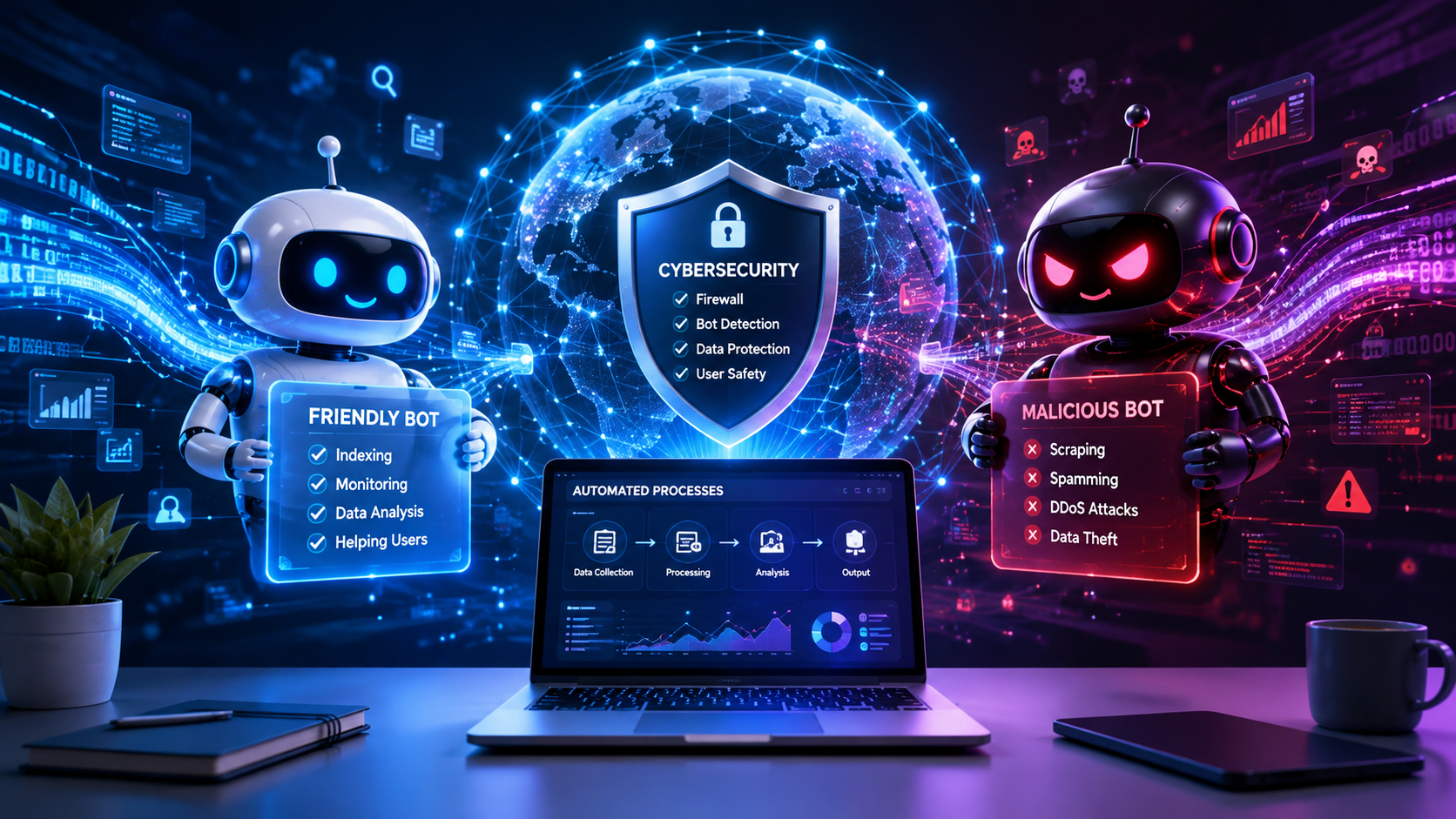
How Do Bots Work?
Bots are programmed with a set of instructions that tell them what actions to perform.
Depending on their purpose, a bot may:
- Visit websites automatically.
- Collect information.
- Respond to user requests.
- Monitor systems.
- Process data.
- Send messages.
- Perform scheduled tasks.
- Interact with online services through APIs.
Some bots operate continuously, while others activate only when specific conditions are met.
Common Types of Helpful Bots
Not all bots are harmful. In fact, many of the internet services we rely on every day depend on beneficial bots.
* Search Engine Crawlers
Search engines use bots (often called web crawlers or spiders) to discover and index web pages. This allows users to find websites through search results.
* Customer Service Chatbots
Many businesses use chatbots to answer common questions, provide product information, and assist customers 24 hours a day.
* Monitoring Bots
These bots monitor websites, servers, or networks and notify administrators if problems occur.
* Backup Bots
Some cloud services automatically back up files using scheduled automation.
* Social Media Automation
Businesses often use bots to schedule posts, monitor engagement, or respond to simple inquiries.
These legitimate bots help improve efficiency and user experience.
Common Types of Malicious Bots
Unfortunately, not every bot has good intentions.
Cybercriminals use malicious bots to perform harmful activities on a large scale.
* Spam Bots
These bots send large volumes of unwanted emails, comments, or messages.
* Scraper Bots
Some bots copy website content without permission for resale, plagiarism, or fraudulent purposes.
* Malware Bots
These bots help spread malicious software by downloading or installing malware on compromised devices.
* Fake Account Bots
These bots create fake social media accounts to spread misinformation, manipulate discussions, or artificially increase follower counts.
How Do Bots Affect Everyday Users?
Most internet users interact with bots every day, often without realizing it.
Positive examples include:
- Receiving instant customer support.
- Searching the web.
- Receiving weather updates.
- Getting package tracking notifications.
- Booking appointments online.
Negative impacts may include:
- Spam emails.
- Fake online reviews.
- Ticket scalping.
- Account hacking attempts.
- Fraudulent social media interactions.
- Malicious WordPress Bots that may attempt to submit spam comments, create fake accounts.
Learning to recognize malicious bot activity helps reduce these risks.
How to Protect Yourself from Malicious Bots
Although many bots target websites rather than individual users, there are steps you can take to stay safe.
* Use Strong Passwords
Unique passwords make credential-stuffing attacks much less effective.
* Enable Two-Factor Authentication (2FA)
Even if attackers obtain your password, 2FA adds an additional layer of security.
* Keep Software Updated
Security updates help close vulnerabilities that malware bots may exploit.
* Be Careful with Links
Avoid clicking suspicious links in emails, text messages, or social media posts.
* Use Antivirus Software
Reliable security software can detect many types of bot-related malware.
* Monitor Your Accounts
Review login activity regularly for signs of unauthorized access.
How Websites Defend Against Bots
Website owners use various techniques to distinguish legitimate visitors from automated bots.
Common methods include:
- CAPTCHA challenges.
- Rate limiting.
- Bot detection systems.
- Web application firewalls (WAFs).
- Behavioral analysis.
- IP reputation monitoring.
These tools help reduce spam, fraud, and automated attacks while allowing legitimate users to access the website.
Final Thoughts
A bot is a software program that performs repetitive or automated tasks over the internet without requiring constant human control.
An internet bot is a software program that runs automated tasks online.
It can do repetitive jobs much faster than a human.
Common examples include web crawlers that index web pages and chatbots that answer customer questions
Bots can operate much faster than humans and can complete thousands—or even millions—of actions within a short period. They follow predefined instructions and may respond automatically to specific events or requests.
Bots are widely used by businesses, search engines, developers, and online services to improve efficiency and automate routine processes.
KEYNOTES
1. What is a bot?
A bot is a software program that performs automated tasks over the internet without constant human intervention.
2. Are all bots harmful?
No. Many bots, such as search engine crawlers and customer service chatbots, provide useful services. Only malicious bots are designed to cause harm.
3. How can I protect myself from malicious bots?
Use strong passwords, enable Two-Factor Authentication, keep your software updated, install reputable antivirus software, and avoid suspicious links or downloads.
4. Can bots steal passwords?
Yes. Some malicious bots are designed to collect login credentials or automatically test stolen usernames and passwords against multiple websites.
5: Can Bots can think like humans.
No. Bots cannot think like humans in the same way people do.
Most bots follow programmed instructions and cannot reason independently like people.
A simple distinction is:
Humans: Think, feel, experience, and make decisions through biological processes.
Traditional bots: Follow predefined rules and instructions.
AI-powered bots: Analyze data and generate responses based on patterns learned from data and their programming.
Interested in learning more? Explore our in-depth guides by clicking the highlighted links throughout this article, or browse our blog for additional tutorials, tips, and resources. You’ll find practical information to help you expand your knowledge and stay informed.