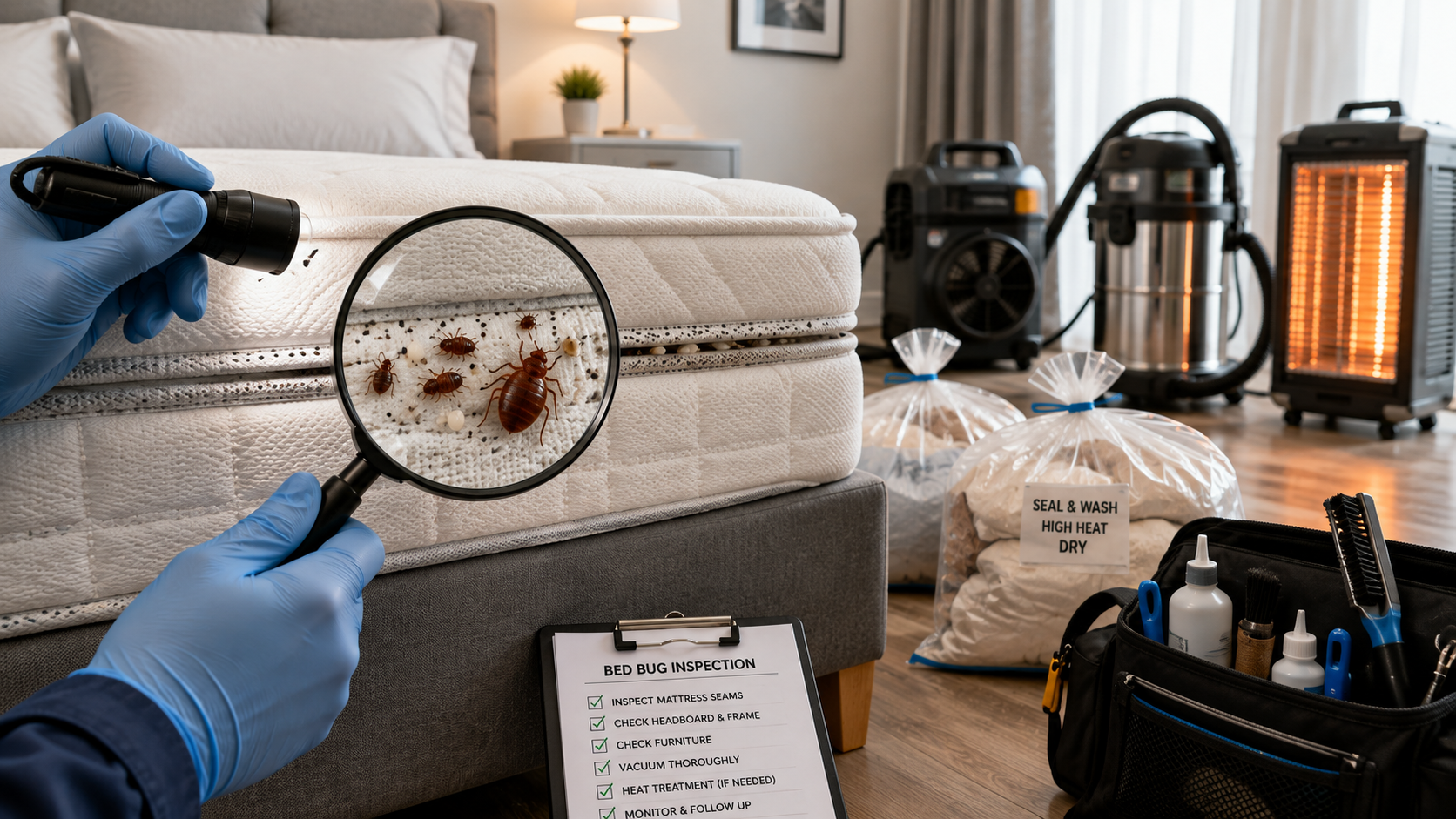
How to Kill Bed Bugs: A Complete Guide
Bed bugs are small, reddish-brown insects that feed on blood, usually at night. Although they are not known to transmit diseases in the same way as some other pests, their bites can cause itching and discomfort, while an infestation can create considerable stress.
One of the biggest challenges with bed bugs is that they are excellent at hiding. They can live in mattress seams, bed frames, cracks, furniture, carpets, curtains, and other small spaces. A few surviving bugs can eventually reproduce and cause another infestation.
The good news is that bed bugs can be eliminated. However, successful treatment usually requires more than simply spraying an insecticide or throwing away a mattress. A combination of cleaning, heat treatment, vacuuming, monitoring, and appropriate pest-control methods is often necessary.
What Are Bed Bugs?
Bed bugs are small, wingless insects that feed primarily on blood. Adult bed bugs are approximately the size of an apple seed, although their appearance can vary depending on whether they have recently fed.
They often hide during the day and become active at night.
Common hiding places include:
- Mattress seams
- Box springs
- Bed frames
- Headboards
- Furniture cracks
- Carpets
- Curtains
- Wall gaps
- Electrical outlets and other small spaces
Because they can hide so effectively, finding and treating every hiding place is essential.
How to Know If You Have Bed Bugs
Bed bug bites alone are not enough to confirm an infestation because other insects can cause similar skin reactions.
Look for additional signs such as:
- Small reddish or dark spots on bedding
- Tiny pale eggs or eggshells
- Shed insect skins
- Live insects around mattress seams
- Small dark fecal spots
- A persistent unpleasant odor in severe infestations
Inspect the mattress, bed frame, and surrounding furniture carefully using a flashlight.
How to Get Rid of Bed Bugs: Effective Steps to Kill Bed Bugs
Step 1: Remove and Wash Bedding
Start by carefully removing sheets, pillowcases, blankets, and other washable bedding.
Place the items directly into sealed plastic bags before carrying them through other rooms. This helps reduce the chance of accidentally spreading bed bugs.
When washing bedding, always follow the manufacturer’s care instructions. For fabrics that can handle higher temperatures, use the hottest recommended water setting to help ensure a thorough clean. Keep in mind that some bedding materials require lower temperatures to prevent shrinking, fading, or damage.
Dry them thoroughly using a high-temperature dryer setting when appropriate.
Heat is particularly useful because bed bugs and their eggs are vulnerable to sufficiently high temperatures.
Step 2: Use Heat to Kill Bed Bugs
Heat is one of the most effective methods for killing bed bugs when applied correctly.
Washable clothing and bedding can be treated using washing and high-temperature drying.
For items that cannot be washed, professional heat treatment may be an option. Pest-control professionals can raise room temperatures to levels designed to kill bed bugs throughout hiding places.
Do not attempt to create dangerous temperatures in your home using improvised heaters, ovens, fireplaces, or other unsafe methods. Improper heating can cause fires, damage property, or create serious safety hazards.
Sunlight and Thorough Cleaning
On hot, sunny days, placing washable bedding outdoors can be part of your bedbug-control routine. However, sunlight alone should not be relied on to eliminate bedbugs or their eggs, as temperatures may not become consistently high enough throughout the bedding to kill them.
While the bedding is outside, thoroughly clean the surrounding area and inspect seams, cracks, crevices, and other hiding spots where bedbugs may be present. If using an insecticide, choose a product specifically labeled for bedbug control and follow the manufacturer’s instructions carefully.
Never spray insecticide on bedding unless the product label specifically states that it is safe and approved for use on fabrics. Before treating the entire item, check that the insecticide will not stain, bleach, or discolor the material.
Step 3: Vacuum Thoroughly – (If Available)
Vacuum areas where bed bugs may be hiding.
Pay particular attention to:
- Mattress seams
- Bed frames
- Floor edges
- Carpet edges
- Furniture joints
- Cracks and crevices
Use a vacuum attachment to reach narrow spaces.
After vacuuming, empty the vacuum contents carefully into a sealed bag and dispose of them appropriately. Clean the vacuum according to the manufacturer’s instructions.
Vacuuming can remove live bugs, eggs, shed skins, and other debris, but it should be combined with other treatment methods.
Step 4: Treat the Mattress and Bed Frame
Inspect your mattress carefully, especially around seams and folds.
A bed bug-proof mattress encasement can be useful because it traps bed bugs inside and prevents additional insects from entering the mattress.
Keep the encasement securely closed and follow the manufacturer’s instructions.
Also inspect and clean the bed frame, headboard, and surrounding furniture.
Step 5: Reduce Hiding Places
Bed bugs prefer dark, protected spaces.
Reduce clutter around your bed and furniture so there are fewer places for them to hide.
Consider:
- Removing unnecessary items from underneath the bed
- Cleaning cracks and gaps
- Moving furniture slightly away from walls
- Repairing damaged areas where insects can hide on the wall
- Keeping clothing off the floor
Reducing clutter also makes future inspections easier.
Step 6: Use Insecticides Carefully
After infested furniture or bedding has been moved out of the room, thorough treatment of the affected area is essential to address bedbugs that may still be hiding in cracks, crevices, furniture joints, and other hard-to-reach spaces. If you choose to use an insecticide, select a product specifically labeled for bedbug control and carefully follow all directions on the product label.
For effective and safe application:
- Never use more insecticide than the recommended amount. Applying extra product does not necessarily make the treatment more effective and can increase health risks.
- Wear the recommended protective equipment, such as gloves and appropriate respiratory protection, as specified on the product label.
- Keep people and pets out of the treated area during application and for the length of time stated on the product label.
- Allow the room to air out properly before re-entering. Do not occupy the room until the label says it is safe to do so and any strong fumes have cleared.
- Repeat treatment only when appropriate. Some bedbug infestations require multiple treatments, but the timing and frequency should always follow the insecticide label instructions.
- Clean the room before moving back in. Once the required waiting period has passed and the room is safe to enter, carry out normal cleaning to remove dirt, debris, and any residue that the product label instructs you to remove.
- Do not apply insecticides to mattresses, clothing, children’s areas, or other surfaces unless the product label specifically permits that use.
- Avoid using household chemicals that are not designed for pest control. Dangerous substances such as fuel, kerosene, bleach mixtures, or other improvised chemicals can cause poisoning, fires, or serious injuries.
Remember that insecticide treatment should be part of a broader bedbug-control strategy, including thorough inspection, cleaning, laundering, and monitoring for remaining bedbugs.
Step 7: Monitor for Surviving Bed Bugs
Bed bug treatment often requires repeated monitoring.
Inspect your sleeping area regularly after treatment.
Bed bug interceptors can also be placed beneath bed legs to help detect and trap insects attempting to reach the bed.
Continue monitoring even if you stop seeing live bugs. Eggs may survive an initial treatment depending on the method used.
Why Some Common Methods Do Not Work
Several popular approaches can make an infestation worse or create unnecessary risks.
* Bug Bombs and Foggers
Foggers may not reach bed bugs hiding deep inside cracks and furniture. They can also create health and fire hazards when used improperly.
* Turning Up the Room Temperature
Simply increasing the thermostat is unlikely to heat every hiding place sufficiently to eliminate an infestation.
* Throwing Away the Mattress
Replacing a mattress without treating the surrounding room will not solve the underlying problem. Bed bugs can live in bed frames, furniture, walls, and other locations.
* Spraying Random Chemicals
Unapproved chemicals can be dangerous and may damage furniture or expose household members to harmful substances.
When Should You Call a Professional?
Consider contacting a qualified pest-control professional when:
- The infestation is widespread.
- Bed bugs are present in multiple rooms.
- Previous treatments have failed.
- You live in an apartment or shared building.
- You are unsure how to treat the infestation safely.
Professionals can inspect the property and develop a treatment plan based on the severity of the infestation.
How to Prevent Bed Bugs From Returning
After eliminating an infestation, prevention is important.
When traveling:
- Inspect hotel mattresses and bed frames.
- Keep luggage away from beds when possible.
- Avoid placing clothing directly on hotel floors.
- Wash and dry clothing after returning home when appropriate.
- Inspect luggage before storing it.
At home, regularly inspect mattresses and furniture, especially after purchasing used furniture.
Final Thoughts
Getting rid of bed bugs requires patience and a systematic approach. Washing and drying bedding, using appropriate heat treatments, vacuuming, reducing clutter, protecting mattresses, monitoring for surviving insects, and using properly labeled pest-control products can all contribute to successful elimination.
Avoid dangerous home remedies and do not rely on a single treatment method. If the infestation is large or difficult to control, professional pest control is often the best option.
The most important lesson is to act early. The sooner a bed bug infestation is identified and treated correctly, the easier it is to prevent the insects from spreading throughout your home.
KEYNOTES
1. What kills bed bugs instantly?
Direct exposure to sufficiently high heat can kill bed bugs, but achieving effective temperatures throughout an infested area requires proper equipment and procedures. Professional heat treatment is one option for serious infestations.
2. Can washing clothes kill bed bugs?
Washing can help remove bed bugs, but appropriate high-temperature drying is particularly important for killing insects and eggs that may remain on fabrics.
3. Can I get rid of bed bugs without an insecticide?
No, while cleaning and heat-based methods can help, insecticide is an important part of effectively eliminating bed bugs, especially in established infestations.
4. Should I throw away my mattress if I have bed bugs?
Not necessarily. A mattress encasement designed for bed bugs can help contain insects in the mattress. The surrounding bed frame and room must also be treated.
5. Can bed bugs live in clothes?
Yes. Bed bugs can hide in clothing, especially clothing stored near an infested sleeping area. Washing and appropriately high-temperature drying can help eliminate them.
6. Do bed bugs go away on their own?
Usually, no. Without treatment, an infestation can persist and spread because bed bugs can survive for extended periods and reproduce.
7. Can bed bugs come back after treatment?
Yes. Surviving eggs or insects can cause a new infestation, or bed bugs can be reintroduced from another location. Continued inspection and monitoring are therefore important.
Interested in learning more? Explore our in-depth guides by clicking the highlighted links throughout this article, or browse our blog for additional tutorials, tips, and resources. You’ll find practical information to help you expand your knowledge and stay informed.