How to Fix a Damaged Car Cooling Fan
What Does a Car Engine Cooling Fan Do?
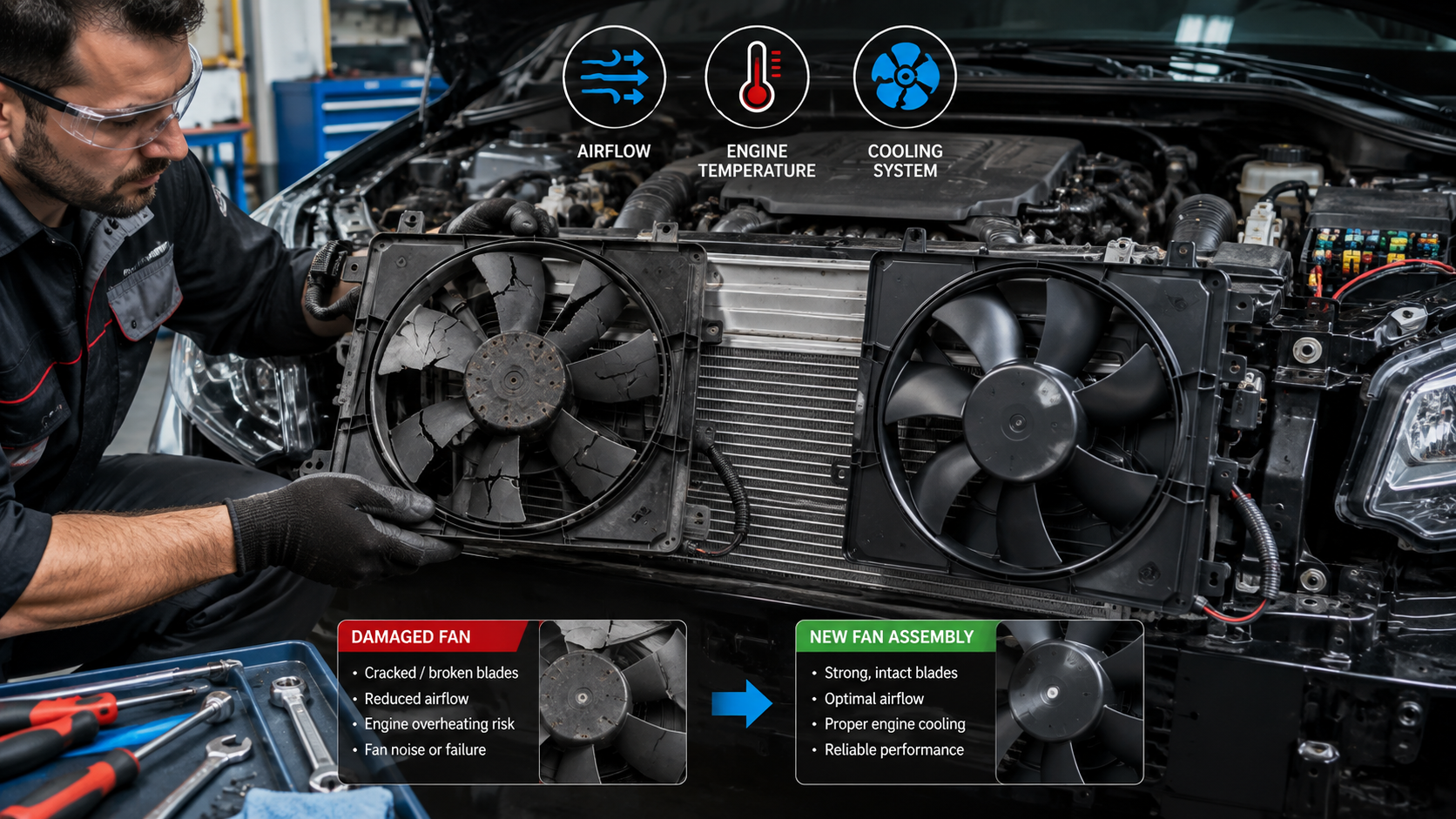
The cooling fan is designed to pull or push air through the radiator.
The radiator contains coolant that absorbs heat from the engine. As air passes through the radiator, heat is transferred away from the coolant.
In many modern vehicles, the cooling fan is powered by an electric motor and controlled automatically. Sensors and the vehicle’s control system can activate the fan when the engine reaches a certain temperature or when additional cooling is required.
Some vehicles may use mechanical or belt-driven fans, although electric cooling fans are common in many modern cars.
A damaged fan can reduce airflow and cause the engine temperature to rise, especially during traffic or when the vehicle is stationary.
Common Signs of a Damaged Cooling Fan
A cooling fan problem may produce several warning signs.
These signs can include:
- The engine temperature gauge rises unusually high.
- The vehicle overheats while idling or sitting in traffic.
- The fan does not turn on when expected.
- The fan makes grinding, rattling, or unusually loud noises.
- The air conditioning performance changes when the vehicle is stationary.
- A dashboard warning light appears.
- The fan blades are visibly cracked or damaged.
- The fan operates intermittently.
Not every overheating problem is caused by the cooling fan. Low coolant, a faulty thermostat, a damaged water pump, radiator problems, or other cooling system faults can produce similar symptoms.
For this reason, proper diagnosis is important before replacing parts.
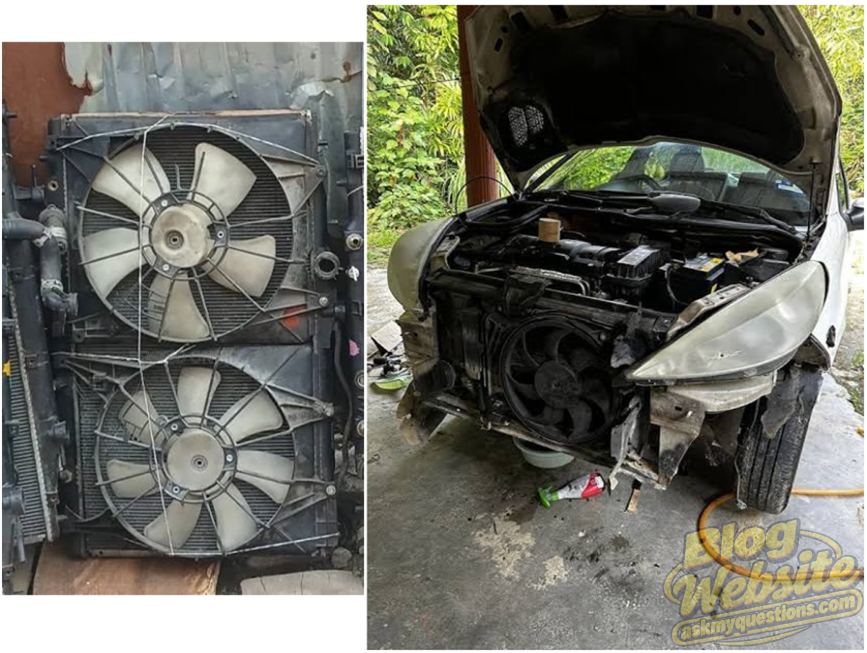
Steps to Fix an Overheating Engine: Cooling Fan Troubleshooting Guide:
Step 1: Park the Vehicle and Allow the Engine to Cool
If you notice that your engine is overheating, pull over safely when possible and turn off the engine.
Do not continue driving an overheating vehicle unless necessary to reach immediate safety. Continuing to operate an overheated engine can cause serious damage.
Allow the engine to cool completely before opening the hood or inspecting cooling components.
Be especially careful around:
- The radiator
- Coolant hoses
- The cooling fan
- The engine
The cooling system may remain hot and pressurized after the engine is switched off.
Step 2: Perform a Visual Inspection
Once the engine has cooled, open the hood and inspect the cooling fan area.
Look for obvious problems such as:
- Cracked or broken fan blades
- Loose mounting components
- Damaged electrical connectors
- Frayed or damaged wiring
- Dirt or debris preventing the fan from rotating
- Signs of contact between the fan and another component
Do not attempt to repair severely cracked or broken plastic fan blades with glue or temporary materials. A damaged fan can break apart while spinning and may cause further damage.
In most cases, a severely damaged fan blade or assembly should be replaced.
Step 3: Check Whether the Fan Can Rotate Freely
With the engine completely off and the vehicle in a safe condition, inspect whether the fan appears obstructed.
Do not assume that an electric fan is safe simply because the engine is off. Some vehicles can activate cooling fans automatically under certain conditions.
Avoid placing your hands inside the fan area unless you have followed the vehicle manufacturer’s safety procedures.
If debris, such as leaves or loose material, is blocking the fan, carefully remove it only when the vehicle is completely powered down and safe to work on.
If the fan assembly appears loose or physically damaged, professional inspection may be necessary.
Step 4: Check the Cooling Fan Fuse
Many electric cooling fans are protected by a fuse.
Consult your vehicle owner’s manual or fuse box diagram to locate the cooling fan fuse.
Inspect the fuse for signs of failure.
If a fuse has blown, replace it only with a fuse of the correct rating specified by the vehicle manufacturer.
Do not install a larger fuse in an attempt to keep it from blowing. A repeatedly blown fuse may indicate a wiring problem, a failing fan motor, or another electrical fault.
If the replacement fuse also fails, the system should be inspected by a qualified technician.
Step 5: Inspect the Cooling Fan Relay
Some vehicles use a relay to control power to the cooling fan.
A faulty relay may prevent the fan from receiving power even when the fan motor itself is functional.
The location and testing procedure vary depending on the vehicle.
If your vehicle has a relay box and the owner’s manual identifies a cooling fan relay, inspect it according to the manufacturer’s instructions.
Electrical diagnosis can involve testing voltage and continuity. If you are unfamiliar with automotive electrical systems, it is safer to have a qualified mechanic perform these tests.
Step 6: Inspect the Electrical Connections
The cooling fan depends on electrical connections to operate.
Check for:
- Loose connectors
- Corrosion
- Damaged insulation
- Broken wires
- Burn marks
- Melted connectors
Do not attempt to reconnect damaged wiring with unsafe temporary methods.
Electrical problems can cause intermittent fan operation, blown fuses, or damage to other vehicle components.
A damaged connector or wiring harness may require proper repair or replacement.
Step 7: Check the Cooling Fan Motor
If the fan blades and wiring appear normal but the fan does not operate, the fan motor may be faulty.
Common signs of a failing motor include:
- The fan does not spin.
- The fan works only occasionally.
- The fan spins unusually slowly.
- The motor produces grinding or abnormal noises.
- The fan stops working completely.
Depending on the vehicle, the motor may be replaceable separately, or the complete cooling fan assembly may need to be replaced.
Because access can be difficult in some vehicles, professional replacement may be the safest option.
Step 8: Check Related Cooling System Components
A fan that does not run may not always be the actual source of the problem.
Depending on the vehicle, the cooling fan may be controlled by temperature sensors, switches, relays, fuses, or the vehicle’s electronic control system.
Other possible cooling problems include:
- Low coolant level
- Coolant leaks
- A faulty thermostat
- A damaged radiator
- A failing water pump
- A faulty temperature sensor
If the fan itself works but the engine continues to overheat, another component in the cooling system may require attention.
Replacing a Damaged Cooling Fan
If inspection confirms that the fan blades, motor, or complete assembly are damaged, replacement may be necessary.
The general process can include:
- Allowing the engine to cool completely.
- Disconnecting the vehicle’s power according to the manufacturer’s recommended procedure.
- Removing covers or components blocking access to the fan.
- Disconnecting the fan’s electrical connector.
- Removing the fan mounting bolts or retaining clips.
- Carefully removing the damaged fan assembly.
- Installing a compatible replacement.
- Securing all mounting hardware.
- Reconnecting electrical connections.
- Testing the cooling system according to the vehicle manufacturer’s procedure.
The exact procedure can vary significantly between vehicles. On some models, access may require removing additional components.
For this reason, consult the vehicle’s service information before beginning a replacement.
Can You Drive With a Broken Cooling Fan?
Driving with a damaged cooling fan is risky.
The vehicle may appear to operate normally at highway speeds because air naturally passes through the radiator. However, when driving slowly or sitting in traffic, the lack of fan airflow can cause the engine temperature to rise quickly.
If your temperature gauge moves into the overheating range or an overheating warning appears, stop the vehicle safely and turn off the engine.
Do not rely on repeatedly adding coolant or ignoring warning signs as a solution.
How to Prevent Cooling Fan Problems
Regular vehicle maintenance can help you identify cooling system problems early.
Consider the following:
- Check the engine temperature gauge regularly.
- Inspect the cooling system during routine maintenance.
- Keep the radiator area free from excessive debris.
- Address coolant leaks promptly.
- Use the correct coolant recommended for your vehicle.
- Pay attention to unusual fan noises.
- Do not ignore overheating warnings.
- Follow the vehicle manufacturer’s maintenance schedule.
When Should You Contact a Mechanic?
A qualified mechanic should inspect the vehicle if:
- The engine repeatedly overheats.
- The cooling fan does not operate.
- Fuses repeatedly blow.
- Wiring is damaged.
- The fan starts unexpectedly or behaves abnormally.
- The cooling system is leaking.
- You are unsure which component is faulty.
Modern vehicles can have complex cooling and electrical control systems, and incorrect repairs may cause additional damage.
Final Thoughts
A damaged engine cooling fan can cause overheating, particularly when a vehicle is idling or moving slowly. Common problems include broken fan blades, a failed motor, blown fuses, damaged wiring, faulty relays, and issues with the components that control the fan.
Start with a safe visual inspection and check for obvious damage, loose connections, or debris. If the fan itself is damaged, replacing the faulty component is generally safer than attempting a temporary repair.
Remember that overheating is not always caused by the cooling fan. Problems with coolant, the thermostat, radiator, water pump, or sensors can create similar symptoms.
If you are uncertain about the diagnosis or the vehicle continues to overheat, stop driving it and seek help from a qualified automotive technician. Addressing the problem early can help prevent more serious and costly engine damage.
KEYNOTES
1. What causes a car cooling fan to stop working?
Common causes include a blown fuse, faulty relay, damaged wiring, failed fan motor, broken fan blades, or a problem with the temperature sensor or control system.
2. Can a bad cooling fan cause engine overheating?
Yes. A failed cooling fan can reduce airflow through the radiator, particularly when the vehicle is stationary or moving slowly, which can contribute to overheating.
3. Can I repair broken cooling fan blades?
Severely cracked or broken fan blades should generally be replaced rather than repaired with temporary adhesives or patches.
4. Why does my car overheat only when sitting in traffic?
A common possibility is insufficient airflow through the radiator. A faulty cooling fan can contribute, although other cooling system problems are also possible.
5. Can I drive with a faulty cooling fan?
It is risky because the engine may overheat, especially in traffic or while idling. If the temperature rises into the overheating range, stop the vehicle safely.
6. How do I know if my cooling fan motor is bad?
Signs may include the fan not spinning, intermittent operation, unusually slow rotation, or grinding and abnormal noises.
7. Why does the cooling fan fuse keep blowing?
A repeatedly blown fuse may indicate excessive electrical current caused by a failing motor, damaged wiring, or another electrical fault. The underlying problem should be diagnosed.
8. Should I replace the fan motor or the entire fan assembly?
This depends on your vehicle and the type of damage. Some vehicles allow the motor to be replaced separately, while others use an integrated fan assembly.
Interested in Learning More? Explore our in-depth guides by clicking the highlighted links throughout this article, or browse our blog for additional tutorials, tips, and resources. You’ll find practical information to help you expand your knowledge and stay informed. VISIT WWW.ASKMYQUESTIONS.COM