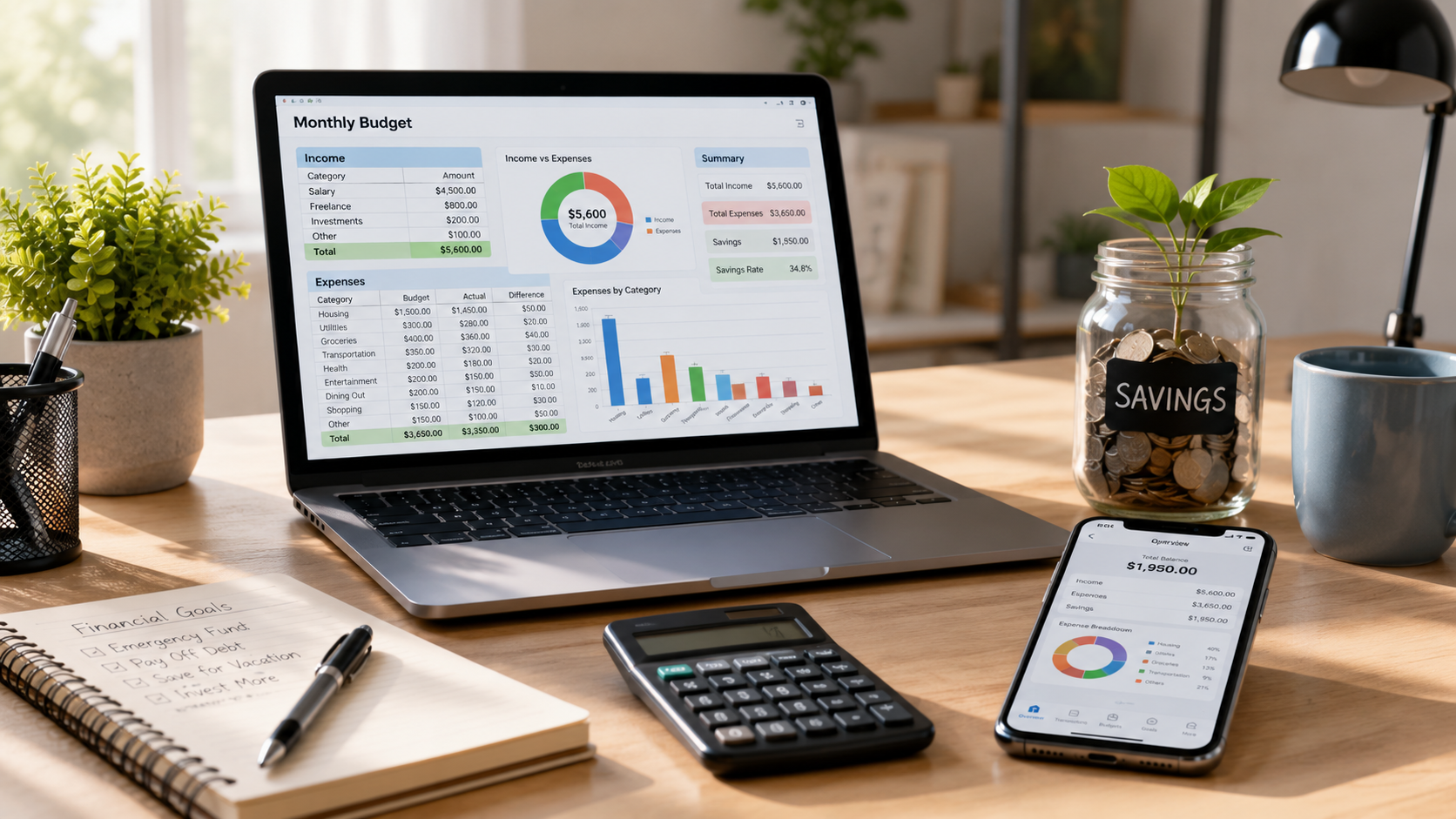
Establishing a budget is a powerful method to manage your finances. It helps you save for big expenses, pay off debts, build an emergency fund, or stretch your paycheck until the month ends. A budget serves as a straightforward guide for handling your money effectively.
Many believe that budgeting requires sacrificing all pleasures, but this is a misunderstanding. A solid budget focuses on making thoughtful choices with your finances, allowing you to reach your financial objectives while still enjoying life.
Budgeting
A budget is a financial plan that tracks your income and expenses over a specific period, usually a month. It helps you understand how much money you earn, where it goes, and how much you can save or invest.
Rather than guessing whether you can afford a purchase, a budget gives you a clear picture of your financial situation. It also helps you identify unnecessary spending and prioritize what matters most.
Why Is Budgeting Important?
Budgeting offers numerous benefits, including:
- Preventing overspending
- Reducing financial stress
- Building savings
- Paying bills on time
- Avoiding unnecessary debt
- Preparing for emergencies
- Achieving financial goals more quickly
Without a budget, it’s easy to lose track of small daily expenses that add up over time. Budgeting brings awareness to your spending habits and empowers you to make informed financial decisions.
Step 1: Calculate Your Monthly Income
The first step in creating a budget is knowing how much money you have coming in each month.
Include all reliable sources of income, such as:
- Salary or wages
- Freelance or side business earnings
- Investment income
- Government benefits (if applicable)
- Rental income
- Other regular income
If your income varies from month to month, calculate an average based on the last three to six months to create a realistic estimate.
Step 2: List All Your Expenses
Next, write down everything you spend money on each month. Divide your expenses into two categories:
Fixed Expenses
These are costs that generally stay the same each month, including:
- Rent or mortgage
- Insurance
- Loan repayments
- Internet service
- Subscription services
- School fees
Variable Expenses
These fluctuate depending on your lifestyle and spending habits, such as:
- Groceries
- Transportation
- Fuel
- Dining out
- Clothing
- Utilities
- Personal care
Reviewing your bank statements and receipts can help you identify expenses you may have forgotten.
Step 3: Set Financial Goals
A budget becomes more meaningful when it’s connected to specific financial goals.
Examples include:
- Building a three- to six-month emergency fund
- Paying off credit card debt
- Saving for a vacation
- Buying a car
- Purchasing a home
- Starting a business
- Investing for retirement
Having clear goals provides motivation to stick to your budget over time.
Step 4: Choose a Budgeting Method
There are several budgeting methods, and the best one depends on your financial situation and preferences.
The 50/30/20 Rule
This popular method divides your after-tax income into three categories:
- 50% for needs (housing, food, transportation, utilities)
- 30% for wants (entertainment, dining out, hobbies)
- 20% for savings and debt repayment
This approach is simple and works well for many households.
Zero-Based Budgeting
With this method, every dollar of your income is assigned a purpose until your income minus expenses equals zero. This doesn’t mean you spend everything—it means every dollar is allocated to spending, saving, or investing.
Envelope Budgeting
Traditionally, cash is divided into labeled envelopes for different spending categories, such as groceries or transportation. Once an envelope is empty, spending in that category stops until the next budget period. Many budgeting apps now offer digital versions of this method.
Step 5: Track Your Spending
Creating a budget is only the beginning. To make it effective, you need to monitor your spending regularly.
You can track expenses using:
- A spreadsheet
- A notebook
- A budgeting app
- Online banking tools
Recording your purchases helps you stay accountable and quickly identify areas where you’re overspending.
Step 6: Adjust Your Budget Regularly
Life changes, and your budget should change with it.
Review your budget at least once a month and update it to reflect:
- Salary increases or decreases
- New bills
- Changes in living expenses
- Unexpected medical costs
- Inflation
- New financial goals
A flexible budget is easier to maintain than one that’s too rigid.
Common Budgeting Mistakes to Avoid
Many people struggle with budgeting because they make avoidable mistakes.
Some of the most common include:
- Underestimating everyday expenses
- Forgetting occasional costs, such as gifts or annual subscriptions
- Setting unrealistic spending limits
- Not including an emergency fund
- Failing to review the budget regularly
- Giving up after one difficult month
Remember, budgeting is a long-term habit, not a one-time task.
Tips for Sticking to Your Budget
To improve your chances of success:
- Pay yourself first by automatically transferring money to savings.
- Build a small emergency fund before focusing on other goals.
- Reduce unnecessary subscriptions.
- Plan meals to lower grocery costs.
- Avoid impulse purchases by waiting 24 hours before buying non-essential items.
- Review your progress each month and celebrate milestones.
Small, consistent improvements often lead to significant financial gains over time.
KEYNOTES
1. What is the easiest budgeting method for beginners?
The 50/30/20 rule is one of the simplest methods. It divides your income into needs, wants, and savings, making it easy to manage your finances.
2. How often should I review my budget?
Review your budget at least once a month or whenever your income or expenses change significantly.
3. Should I budget if my income changes every month?
Yes. Calculate your average monthly income based on recent earnings and create a flexible budget that prioritizes essential expenses and savings.
4. How much should I save each month?
A common recommendation is to save at least 20% of your income if possible. If that’s not realistic, start with a smaller amount and increase it over time.
5. Can budgeting help reduce debt?
Absolutely. A budget helps you identify extra money that can be directed toward paying off loans, credit cards, or other debts more quickly.
Interested in Learning more? Explore our in-depth guides by clicking the highlighted links throughout this article, or browse our blog for additional tutorials, tips, and resources. You’ll find practical information to help you expand your knowledge and stay informed. VIST WWW.ASKMYQUESTIONS.COM