How to Replace a Car Battery: Step-by-Step Guide for Beginners
Signs That Your Car Battery May Need Replacement
Before replacing a battery, it is useful to identify whether the battery is actually the problem.
Common signs include:
- The engine cranks slowly when starting.
- The vehicle requires frequent jump-starting.
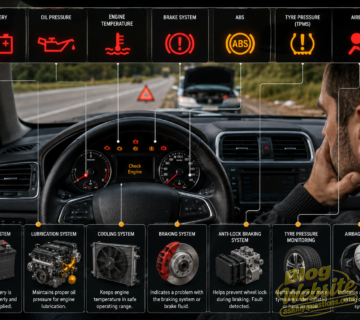
- Dashboard warning lights indicate a charging or battery-related problem.
- Headlights appear unusually dim when the engine is off.
- The battery is old and no longer performs reliably.
- The battery case is visibly swollen, damaged, or leaking.
However, these signs do not always mean the battery itself is faulty. Problems with the alternator, battery terminals, cables, or another part of the electrical system can produce similar symptoms.
If possible, have the battery and charging system tested before purchasing a replacement.
What You Will Need
Before changing the battery, gather the necessary equipment.
You may need:
- A replacement battery compatible with your vehicle
- A wrench or socket set
- Protective gloves
- Safety glasses
- A battery terminal cleaning brush, if necessary
- A clean cloth
- A battery terminal protector, if recommended
The replacement battery should match your vehicle’s requirements. Check the owner’s manual or the specifications on the existing battery for information such as battery size, terminal layout, and required electrical capacity.
NB: Do not assume that any battery that physically fits into the battery tray is suitable for your vehicle.
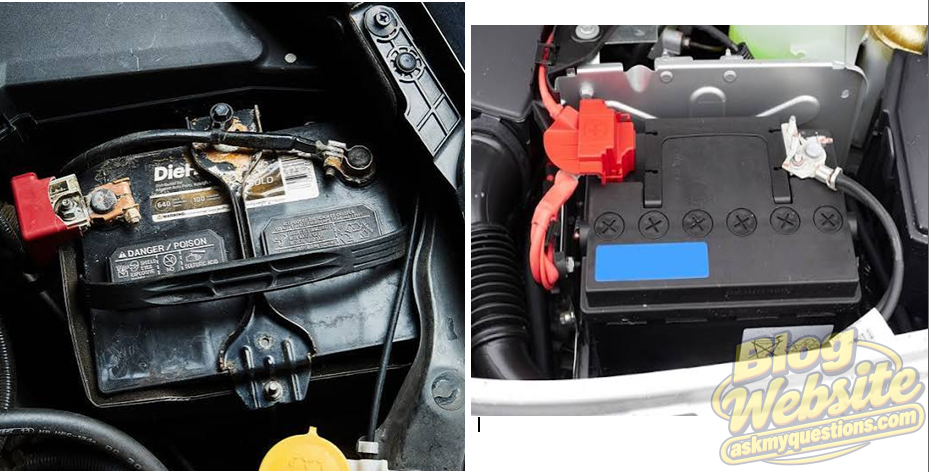
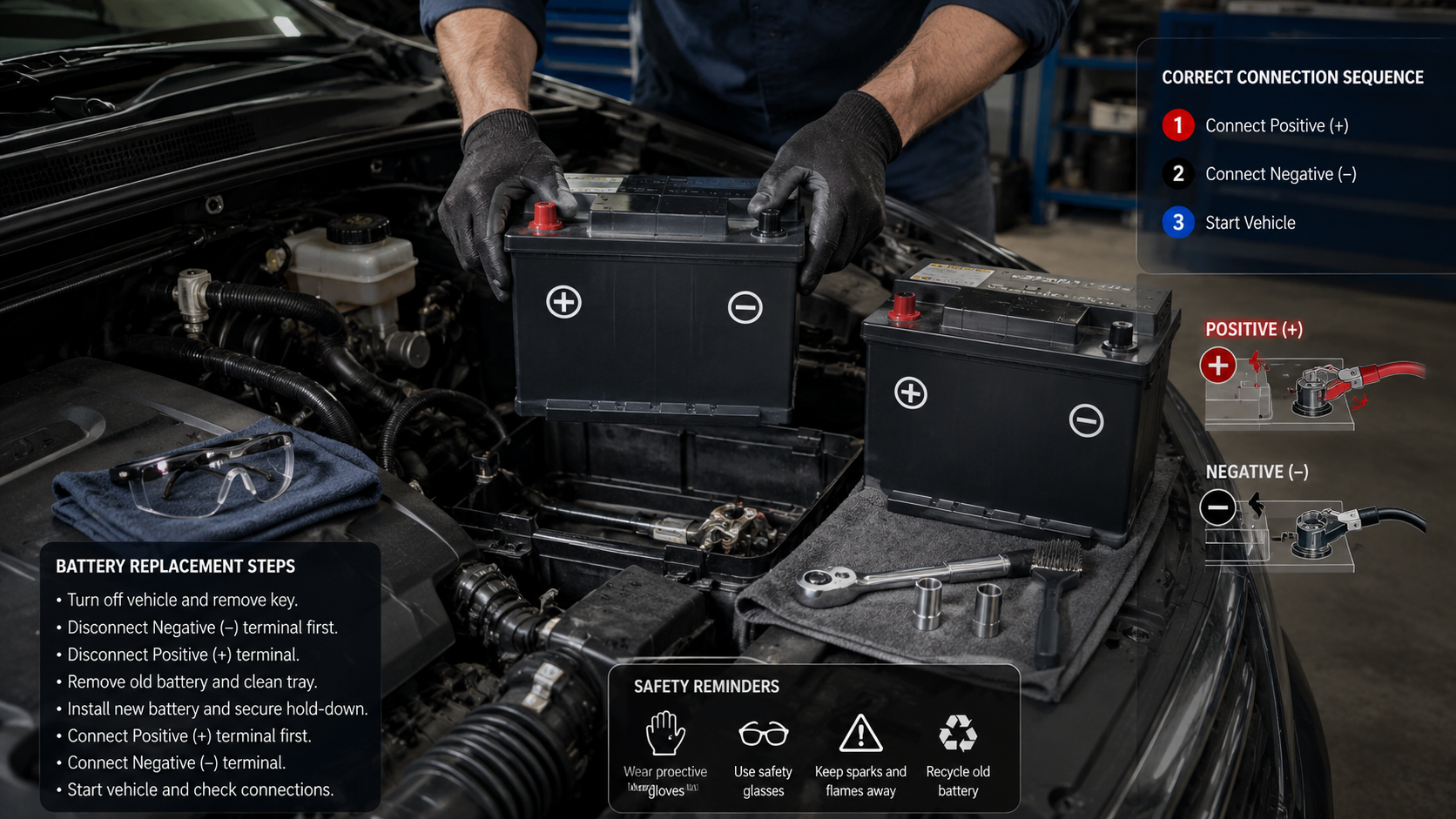
Installing a new car battery is a straightforward process when done carefully; the following steps explain how to safely remove the old battery and install the replacement:
Step 1: Park the Vehicle Safely
Park your car on a flat, stable surface.
Turn off the engine completely and place the vehicle in Park for an automatic transmission or in the appropriate safe position for a manual transmission. Apply the parking brake.
Remove the ignition key if applicable and turn off unnecessary electrical equipment, including lights and accessories.
Open the hood and locate the battery.
In many vehicles, the battery is located inside the engine compartment. However, some vehicles have batteries located in the trunk, under a seat, or in another compartment.
Step 2: Identify the Positive and Negative Terminals
Before disconnecting anything, identify the battery terminals.
The negative terminal is usually marked with a minus sign (−) and may be connected to a black cable.
The positive terminal is usually marked with a plus sign (+) and may be connected to a red cable.
Do not rely only on cable color. Always check the symbols on the battery or terminal.
It is important to avoid allowing metal tools to create an electrical connection between the positive terminal and another conductive part of the vehicle.
Step 3: Disconnect the Negative Terminal First
Using the correct wrench or socket, loosen the clamp connected to the negative (−) terminal.
Carefully lift the terminal connector away from the battery post.
Move the disconnected cable aside so that it does not accidentally touch the battery terminal again.
Disconnecting the negative terminal first helps reduce the risk of accidentally creating a short circuit while working around the positive terminal.
Step 4: Disconnect the Positive Terminal
After the negative terminal has been safely disconnected, loosen and remove the positive (+) terminal.
Move the positive cable carefully aside.
Avoid forcing the terminal. If corrosion or buildup makes it difficult to remove, use an appropriate terminal tool or cleaning method rather than excessive force.
Step 5: Remove the Battery Hold-Down Bracket
Most car batteries are secured in place by a hold-down bracket, clamp, or retaining system.
Locate the bracket and remove it using the appropriate tool.
Keep any bolts or components in a safe location because you will need them to secure the new battery.
Never drive a vehicle with an unsecured battery. Movement inside the engine compartment can damage the battery, cables, or nearby components.
Step 6: Carefully Remove the Old Battery
Car batteries can be heavy, so lift carefully.
Keep the battery upright while removing it. Avoid tipping or dropping it.
If the battery is unusually heavy or difficult to access, ask for assistance.
Place the old battery in a stable and safe location away from children, flames, and unnecessary contact.
If you notice a cracked case, leaking material, or significant swelling, avoid handling the damaged battery unnecessarily and seek professional assistance.
Step 7: Inspect and Clean the Battery Area
Before installing the new battery, inspect the battery tray and cable terminals.
Look for:
- Dirt and debris
- Corrosion
- Damaged cables
- Loose connectors
- Signs of leakage
Clean corrosion from the terminals using an appropriate battery terminal cleaning method and follow the instructions for any cleaning product used.
If the cables or connectors are severely damaged, they may need professional repair or replacement.
Make sure the battery tray is clean and dry before installing the new battery.
Step 8: Install the New Battery
Carefully place the new battery into the tray in the correct orientation.
Make sure the positive and negative terminals are positioned correctly relative to the vehicle’s cables.
Reinstall the hold-down bracket and secure the battery firmly.
The battery should not move around inside its mounting area.
Avoid overtightening clamps or mounting hardware, as excessive force can damage components.
Step 9: Connect the Positive Terminal First
When installing the new battery, connect the terminals in the reverse order of removal.
Start with the positive (+) terminal.
Place the connector onto the correct battery post and tighten it securely according to the vehicle manufacturer’s recommendations.
The connection should be firm, but do not use excessive force.
Step 10: Connect the Negative Terminal
After connecting the positive terminal, connect the negative (−) terminal.
Tighten the connector securely.
Check both terminals to ensure they are properly attached and that the cables are routed safely.
If appropriate for your vehicle, you may apply a suitable terminal protector to help reduce corrosion.
Step 11: Test the Vehicle
Close any battery covers or protective components that were removed.
Start the vehicle and check whether it starts normally.
Look for warning lights on the dashboard.
Keep in mind that disconnecting a battery may reset certain vehicle settings, such as:
- The clock
- Radio presets
- Window settings
- Driver assistance settings
- Other electronic preferences
Some modern vehicles may require additional procedures to reset or register the new battery.
If the vehicle does not start or warning messages remain after installation, consult the owner’s manual or contact a qualified technician.
What Should You Do With the Old Battery?
Do not throw an old car battery into normal household waste.
Car batteries contain materials that should be recycled or handled through an appropriate collection system.
Many automotive service centers, battery retailers, recycling facilities, and other authorized collection points accept used batteries.
Store the old battery upright and transport it safely.
Recycling helps ensure that valuable materials are recovered and that potentially hazardous substances are handled properly.
Important Safety Tips
When changing a car battery, remember these basic safety precautions:
- Wear appropriate eye and hand protection.
- Keep sparks, flames, and cigarettes away from the battery.
- Work in a well-ventilated area.
- Use insulated or appropriate tools where possible.
- Remove metal jewelry such as rings or bracelets before working near the battery.
- Disconnect the negative terminal first.
- Connect the positive terminal first during installation.
- Keep the battery upright.
- Never short the battery terminals with a metal object.
- Do not attempt to repair a cracked or leaking battery.
If you are unsure about any step, it is safer to contact a qualified mechanic or battery technician.
Final Thoughts
Replacing a car battery can be a manageable maintenance task when you use the correct replacement battery and follow proper safety procedures. The most important steps are to identify the correct terminals, disconnect the negative terminal first, remove the battery carefully, install the new battery securely, and reconnect the positive terminal first.
However, not every starting problem is caused by a bad battery. Testing the battery and charging system before replacement can help you avoid unnecessary expenses.
Modern vehicles may also have additional electronic requirements, so always check your owner’s manual for model-specific instructions. If you encounter damaged cables, battery leakage, unusual warning lights, or uncertainty about the installation, seek help from a qualified automotive professional.
KEYNOTES
1. Which battery terminal should I disconnect first?
Disconnect the negative (−) terminal first. This helps reduce the risk of accidentally causing a short circuit.
2. Which terminal should I connect first when installing a new battery?
Connect the positive (+) terminal first, followed by the negative terminal.
3. Can I replace my car battery myself?
In many vehicles, yes. However, some modern vehicles have specific battery replacement procedures or may require the new battery to be registered or programmed.
4. How do I know which replacement battery to buy?
Check your vehicle owner’s manual and the specifications of the existing battery. The replacement should meet the vehicle manufacturer’s requirements.
5. Will changing my car battery reset my settings?
It may reset certain settings, including the clock, radio presets, and other electronic preferences. The exact effects depend on the vehicle.
6. What should I do with my old car battery?
Take it to an appropriate battery recycling or collection facility. Do not dispose of it with regular household waste.
7. Why won’t my car start after installing a new battery?
Check that the battery terminals are securely connected and that the battery is properly installed. If the problem continues, the issue could involve the alternator, starter, cables, fuses, or another vehicle system.
8. Is it dangerous to change a car battery?
It can be hazardous if handled incorrectly. Batteries can be heavy, contain corrosive substances, and may create sparks or electrical short circuits. Follow proper safety precautions and seek professional help if you are unsure.
Looking for more helpful information? Check out the highlighted links throughout this article for detailed guides, or explore our blog for additional tutorials, expert tips, and useful resources. At AskMyQuestions.com, we provide practical, easy-to-follow content designed to help you learn more, solve common problems, and stay informed.
Visit AskMyQuestions.com and explore more today!